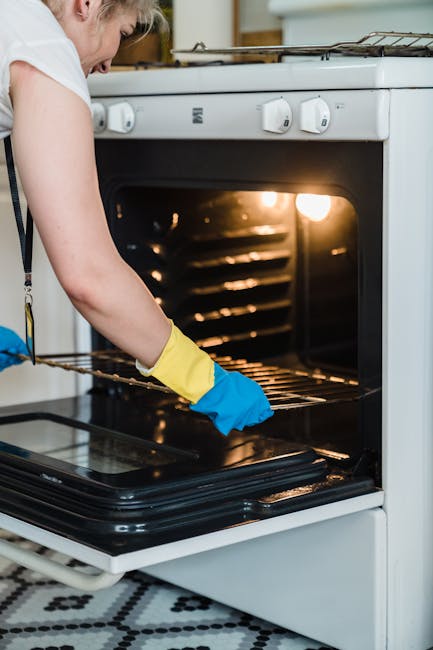
Avoid hidden oven cleaning charges in Haringey
If you have ever compared oven cleaning quotes and thought, "That looks fine... until the extras appear," you are not alone. Hidden charges can turn a simple job into a frustrating one, especially when you are trying to keep a home in good order without spending more than you planned. This guide on how to avoid hidden oven cleaning charges in Haringey will help you spot vague pricing, ask the right questions, and book with a clear head. No drama, no guesswork. Just practical steps that make it easier to pay for what you actually need.
Whether you are booking a one-off clean before guests arrive, sorting a tenancy handover, or simply dealing with a greasy oven that has got away from you, the same rules apply: understand what is included, what might cost extra, and how to compare quotes properly. You will also find a few local-minded tips on checking service quality, payment safety, and where pricing details usually live on a provider's site, such as pricing and quote information and the company's terms and conditions.
Table of Contents
- Why Avoid hidden oven cleaning charges in Haringey Matters
- How Avoid hidden oven cleaning charges in Haringey Works
- Key Benefits and Practical Advantages
- Who This Is For and When It Makes Sense
- Step-by-Step Guidance
- Expert Tips for Better Results
- Common Mistakes to Avoid
- Tools, Resources and Recommendations
- Law, Compliance, Standards, or Best Practice
- Options, Methods, or Comparison Table
- Case Study or Real-World Example
- Practical Checklist
- Conclusion
- Frequently Asked Questions
Why Avoid hidden oven cleaning charges in Haringey Matters
Hidden charges matter because oven cleaning is one of those services that looks straightforward on the surface. In reality, the final price can change depending on the oven type, how dirty it is, whether trays and racks are included, or whether the cleaner needs to deal with awkward access and heavy carbon build-up. If that is not explained early, you end up comparing a headline price with a much higher bill.
In Haringey, where many homes are older terraces, flats, and mixed-use buildings, access can be a real factor. A cleaner might need extra time for parking, carrying equipment up stairs, or working around a compact kitchen. Fair enough, that can affect the cost. The key is that it should be explained before the job starts, not slipped in at the end like a surprise side dish nobody ordered.
Hidden charges are frustrating for another reason too: they make trust harder. A customer who feels pressured or misled is unlikely to book again, recommend the company, or feel comfortable asking questions next time. Clear pricing is not just about money. It is about confidence.
Practical takeaway: if a quote is hard to understand, treat that as a warning sign. Good providers usually make it easy to see what is included, what is optional, and what could trigger an extra fee.
How Avoid hidden oven cleaning charges in Haringey Works
The process is simpler than it sounds. You are basically trying to turn a vague quote into a precise one. That means checking the service details before you agree to anything and confirming whether the price is fixed or estimated.
Here is the typical flow:
- You describe the oven properly. Single oven, double oven, range cooker, integrated appliance, heavily soiled, self-cleaning lining, glass doors, extractor area nearby - these details matter.
- The provider assesses the job. Some companies ask a few questions, others request photos. A clear provider will explain how the quote is built.
- You confirm what is included. This should cover the main oven cavity, racks, trays, door glass, seals, and sometimes hob or extractor add-ons if relevant.
- Any extras are identified upfront. For example, exceptionally heavy grease, additional appliances, or very limited access may add time and cost.
- The final price is agreed before work begins. That is the important bit. Not after the job. Before.
Useful providers will often set out their approach in a clear way on a dedicated oven cleaning page, or explain how quotes are built within their wider cleaning company information. If you cannot find plain-language pricing detail anywhere, keep looking.
One small but important point: "from" pricing can still be honest, but only if the conditions are clear. A "from GBPX" quote should tell you what the base case is and what makes the price go up. Otherwise it is just a shiny number. That is all.
Key Benefits and Practical Advantages
Avoiding hidden charges is not just about protecting your wallet. It gives you a calmer, better booking experience from start to finish. And, to be fair, that matters a lot when you are already juggling housework, work, family, or a move.
- Better budget control. You know the final price before the cleaner arrives.
- Less dispute risk. Clear expectations reduce awkward conversations afterward.
- Better comparison shopping. You can compare like-for-like quotes instead of guessing.
- Faster decisions. When the scope is clear, booking becomes easy.
- Higher service confidence. Transparent pricing often goes hand in hand with better professionalism.
There is also a quality angle. Companies that think carefully about pricing usually think carefully about process too. That tends to show up in punctuality, preparation, and how they treat your kitchen surfaces. No guarantee, of course, but it is a useful pattern.
If you are considering repeat help around the home, clear pricing on one service often reflects broader service standards across domestic cleaning, deep cleaning, or even one-off cleaning. That wider consistency can save a lot of back-and-forth later.
Who This Is For and When It Makes Sense
This matters for more people than you might think. Hidden fees are not only a concern for bargain hunters. They affect busy people, tenants, landlords, property managers, and anyone who wants a clean oven without the price creep.
You will especially benefit from a careful approach if:
- you are booking for a tenancy end and need the final invoice to stay tidy;
- your oven has not been cleaned in a long while and may need a bit more work;
- you are comparing several local providers and want a fair comparison;
- you have a range cooker or a larger appliance with more parts than standard;
- you are arranging multiple services and want the overall cost to stay manageable;
- you have had a vague quote in the past and do not want a repeat performance.
It also makes sense if you are trying to coordinate related work in the same visit, such as house cleaning, end of tenancy cleaning, or carpet cleaning. When more than one service is involved, small pricing misunderstandings can multiply quickly. Better to pin things down early.
Step-by-Step Guidance
Here is a practical way to avoid surprises. Nothing fancy. Just a method that works.
1. Describe the oven properly
Say what you have, not what you think it is called. If it is a single built-in oven with a separate hob, say that. If it is a double oven, a range cooker, or an unusually large model, say that too. Photos help. A lot.
2. Ask what the base price includes
The minimum should be clear. Does it include racks, trays, doors, seals, and removable panels? Are light fittings, extractor areas, or hobs included or extra? If those details are missing, ask. A quick question now is better than a quiet argument later.
3. Check for condition-based surcharges
Some providers charge more for ovens with severe burnt-on grease, smoke damage, or long-term neglect. That is not automatically unreasonable. What matters is whether they tell you how that decision is made.
4. Confirm access and parking expectations
In parts of Haringey, parking or access can be a real issue. If a company expects a surcharge for difficult access, it should be disclosed before the appointment. That includes top-floor flats, restricted entrances, or no-lift buildings.
5. Ask for the final price in writing
An email, message, or booking confirmation is useful. It gives you something to refer back to if there is confusion. Not glamorous, but extremely effective.
6. Check payment terms before the job starts
Understand when payment is due, what methods are accepted, and whether deposits are needed. The company's payment and security information should make this clear. If it does not, ask before the cleaner turns up with the cleaning kit and the good intentions.
7. Inspect the scope at completion
When the work is finished, take a moment to check that the agreed areas have been cleaned. Open the oven door, check the racks, and look at the seals and glass. A quick review at the end can prevent a small issue becoming a bigger one.
Expert Tips for Better Results
Little details make a big difference here. In our experience, the people who avoid hidden charges most successfully are the ones who ask calm, specific questions rather than trying to interrogate the cleaner like a detective in a crime drama.
- Use plain language. Ask, "What could make this price go up?" That question cuts through fluff very quickly.
- Compare total cost, not headline cost. A cheap base rate with extras is often more expensive than a clear fixed fee.
- Ask whether appliance type changes pricing. Range cookers, double ovens, and built-ins are often priced differently.
- Clarify add-ons early. If you want a hob, extractor, or other appliance cleaned, mention it at the quotation stage.
- Keep booking details together. Save the quote, confirmation, and payment notes in one place.
- Choose transparency over polish. A well-presented website is nice. Straight answers are better.
Another small tip: if you are booking during a busy period, such as just before a move-out, do not leave the comparison until the last minute. Rushed bookings often mean looser pricing discussions. And loose pricing discussions... well, you can guess where that goes.
If you want to understand how a provider presents itself beyond the quote, pages like about us and insurance and safety can tell you a lot about how carefully they operate.
Common Mistakes to Avoid
Most pricing problems come from a handful of repeat mistakes. Once you know them, they are easy to dodge.
- Accepting a quote without checking the details. "Sounds fine" is not a strategy.
- Assuming every oven is priced the same. It is rarely that simple.
- Forgetting to mention condition. Heavy grease, smoke marks, and neglected racks can affect time and cost.
- Not asking about extras. If the hob, extractor, or surrounding surfaces are important to you, say so.
- Ignoring payment terms. You should know whether payment is due before, during, or after the clean.
- Choosing only by price. The cheapest quote can be the most expensive once add-ons appear.
One more thing: do not assume a provider is being dishonest just because they have a minimum charge. Minimums are common. The issue is whether they are communicated clearly. There is a difference, and it matters.
Tools, Resources and Recommendations
You do not need specialist equipment to protect yourself from hidden charges. A few simple tools and habits are enough.
- Your phone camera. Take clear photos of the oven before booking if the quote depends on condition.
- A short note of questions. Keep them ready before you call or message.
- Written confirmation. Save any agreed price or add-on list.
- A comparison list. Write down what each provider includes so you can compare fairly.
- Service pages and policies. Look for clear information on oven cleaning, pricing and quotes, and the company's terms and conditions.
If you are booking alongside other cleaning work, it can also help to look at related services such as deep cleaning, cleaners, or home cleaners. Sometimes the best saving comes from planning the whole clean properly, not just chasing the lowest oven price.
Law, Compliance, Standards, or Best Practice
For a service like this, the most useful standard is not a special technical rule. It is straightforward business best practice: clear pricing, honest descriptions, and no surprise add-ons. In the UK, consumer expectations are generally built around transparency, fair treatment, and services matching the description provided before purchase.
That means a customer should reasonably expect:
- the service to be described clearly;
- the price basis to be understandable;
- additional charges to be disclosed where possible before the job starts;
- payment terms to be stated in advance;
- complaints or dispute routes to be available if something goes wrong.
It is also sensible to look for supporting policy pages that show the business takes its responsibilities seriously, such as health and safety policy, privacy policy, and complaints procedure. You may never need them, hopefully, but their presence is a good sign.
For customers, the practical best practice is simple: do not rely on verbal promises alone. Keep the quote, confirm the scope, and make sure everyone is talking about the same job.
Options, Methods, or Comparison Table
There is more than one way to book oven cleaning, and each approach has its own trade-offs. Here is a simple comparison to help you choose.
| Option | What it looks like | Risk of hidden charges | Best for |
|---|---|---|---|
| Fixed quote | One agreed price before the visit | Low, if scope is clear | People who want certainty |
| From-price estimate | Starting price with possible extras | Medium | Standard jobs with straightforward condition |
| On-site assessment | Cleaner inspects before confirming final cost | Low to medium | Unusual ovens or uncertain condition |
| Bundle with other cleaning | Oven cleaning added to a wider booking | Depends on clarity of package | Move-outs, deep cleans, busy households |
If you ask me, the sweet spot for most people is a clear fixed quote or a very clear estimate with defined triggers for extras. Anything fuzzier and you are basically trusting the wind. Not ideal.
Case Study or Real-World Example
A local customer in a flat near a busy high street booked an oven clean after a long winter of roasting trays, weekday dinners, and a bit too much neglect. The first quote looked attractive, but it only covered a standard single oven and did not mention the split door glass, racks, or the awkward top-floor access. When the customer asked for clarification, the provider explained that those items could affect time, but they would be included if listed in advance.
So the customer took two minutes, sent a photo, confirmed the oven type, and asked for the complete price in writing. The final quote was higher than the headline figure, but it was honest. More importantly, there were no surprises on the day. The cleaner arrived, did the job, and the whole thing felt calm rather than tense. Simple, really.
That is the lesson. A transparent quote may not always be the lowest number you first see, but it is often the best value because it protects you from last-minute add-ons. And when you are trying to keep life moving, that kind of clarity is worth a lot.
Practical Checklist
Use this checklist before you book. It will save you time.
- Have I described the oven type clearly?
- Have I shared photos if the condition is unusual?
- Do I know exactly what the base price includes?
- Have I asked about racks, trays, doors, seals, and glass?
- Have I checked whether heavy grease or neglect changes the cost?
- Do I know whether access or parking could add a charge?
- Have I confirmed the final price in writing?
- Do I understand payment timing and methods?
- Have I reviewed the company's terms and policies?
- Do I know who to contact if something is not as agreed?
If you can tick all of those off, you are in a strong position. Not perfect, maybe, but very solid.
Conclusion
Hidden oven cleaning charges are avoidable when you slow down just enough to ask the right questions. That is the real trick. Make the oven type clear, confirm the scope, check for extras, and ask for the final price in writing. When a provider is transparent, the whole experience becomes easier and far less stressful.
In Haringey, where homes and access situations can vary quite a bit, that extra clarity can make all the difference. You should not have to decode a quote like it is a puzzle. You should be able to read it, understand it, and book with confidence. That is the standard worth expecting, honestly.
Get a free quote today and see how much you can save.
If you are ready to compare options, start with clear service details, sensible questions, and a calm eye on the small print. Good service should feel straightforward. And when it does, that is a nice feeling, proper nice.
Frequently Asked Questions
What counts as a hidden oven cleaning charge?
A hidden charge is any extra fee that was not made clear before the job began. That might include charges for oven condition, add-on parts, access issues, or items you assumed were included but were not.
How do I know if an oven cleaning quote is fair?
A fair quote should explain what is included, what could cost more, and when the final price is confirmed. If the provider cannot answer simple questions clearly, keep looking.
Should racks and trays be included in the price?
Often yes, but not always. Some providers include them as standard, while others treat certain items as extras. Ask directly so you are not guessing.
Do all ovens cost the same to clean?
No. Single ovens, double ovens, range cookers, and heavily soiled appliances are usually priced differently. Condition and size can both affect the final cost.
Why do some companies say "from" pricing?
"From" pricing can be reasonable if the base case is explained clearly. It becomes a problem only when the conditions for extra charges are vague or hidden.
Can access problems change the price?
Yes, sometimes. Top-floor flats, difficult parking, stairs, or tight access can increase time and effort, which may affect cost. That should be stated upfront where possible.
Is it better to get a fixed quote or an estimate?
A fixed quote gives more certainty. An estimate can still work well if the provider explains exactly what may change the price and how those changes are handled.
What should I ask before booking oven cleaning in Haringey?
Ask what the quote includes, whether there are condition-based surcharges, whether access affects pricing, and when payment is due. Short questions are usually the best ones.
How can I compare two oven cleaning quotes properly?
Compare the full scope, not just the headline number. One quote may include more items or clearer terms, which makes it better value even if it looks slightly higher.
Do I need written confirmation of the price?
Yes, that is wise. Written confirmation helps avoid misunderstandings and gives you something to refer back to if the job changes or a dispute comes up.
What if the oven is much dirtier than I expected?
Tell the provider before the appointment if you can. If not, ask how they handle very heavy grease or burnt-on residue. A transparent cleaner will explain any change clearly.
Can I bundle oven cleaning with other services to save money?
Sometimes, yes. If you are booking related work such as deep cleaning, house cleaning, or end of tenancy cleaning, ask whether a combined visit changes the overall cost in a good way.
Where can I check a provider's policies before booking?
Useful places include the company's pricing, terms and conditions, payment and security, and complaints procedure pages. Those details help you judge how carefully the business operates.